
Choose cash when you're facing foreclosure, an inherited property in probate, or a tenant situation you want off your plate fast. Sandiegocashforhouses offers both, with no obligation either way.
TL;DR:
- Cash offers are typically below market value because they are based on the property's after-repair value minus estimated expenses.
- A cash sale can close within 7 to 14 days, with minimal repairs or inspections required, making it suitable for urgent situations like foreclosure or probate.
- It is essential to compare the net proceeds from each offer by considering gross price, repair allowances, closing costs, commissions, and contingencies.
- Sellers must still disclose known problems and complete legal forms honestly, regardless of whether they choose a cash sale or MLS listing.
- Verifying proof of funds and clear closing timelines from cash buyers helps avoid delays or unfair offers.
Table of Contents
- What Does Cash for Keys Mean in California Real Estate?
- What's the Real Tradeoff Between Speed and Sale Price?
- How Long Does Each Sale Path Actually Take?
- Do You Still Have to Disclose Problems in an As-Is Sale?
- What Should You Compare on Every Offer You Receive?
- Why San Diego Sellers Get Better Outcomes With Two Options on the Table
- Ready to Compare Your Cash Offer and Your 1% Listing Net?
- Where to Verify These California Selling Rules
- Sources
What Does Cash for Keys Mean in California Real Estate?
You may have seen "cash for keys" used elsewhere to describe payments landlords offer tenants to move out during an eviction. That's not what we're talking about here. In the context of selling your home, cash for keys refers to a direct cash purchase of your property, as-is, from a local investor or homebuying company. You hand over the keys, they hand you a check, and the deal closes without a traditional mortgage buyer in the middle.
The industry term for this transaction is simply a "cash sale" or "as-is cash purchase." Understanding both paths side by side matters more than the label.
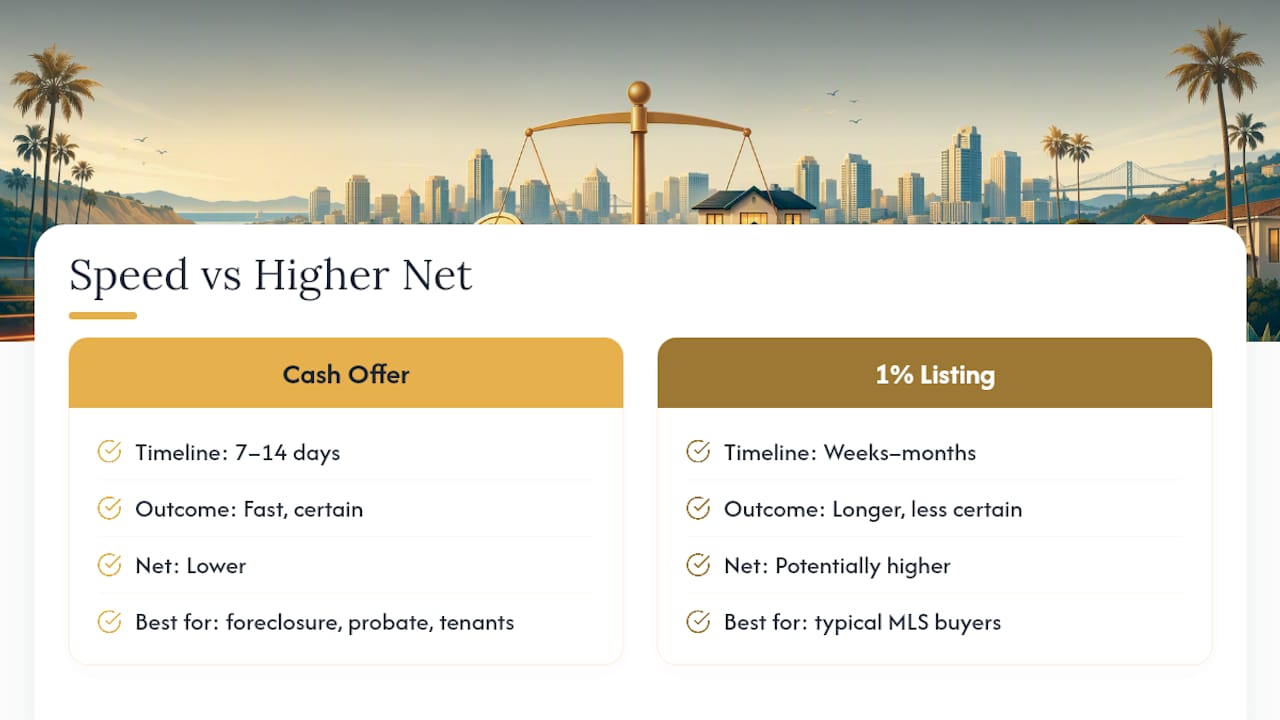
A cash sale means an investor or homebuying company buys your property in its current condition. No repairs, no cleaning, no staging. The buyer typically does a walkthrough rather than a full lender-required inspection, and they handle their own due diligence quickly because they're not waiting on mortgage underwriting. Cash buyers commonly close within 7 to 14 days because they skip the appraisal and loan approval delays that slow down financed purchases.
You still need standard seller disclosures and reasonable prep, and the timeline runs weeks to months depending on your market and condition.
Here's how each path fits common seller situations:
- Foreclosure: Cash sales close fast enough to often outrun an auction date.
- Inherited or probate property: Cash buyers accept properties in rough condition without repair demands.
- Rental with tenants: Investors frequently buy occupied properties, avoiding the eviction process entirely.
- Code violations or unpermitted work: Cash buyers absorb that risk; MLS buyers usually want it resolved first.
- Simple relocation with time to spare: A 1% listing can net you more without much added hassle.
What's the Real Tradeoff Between Speed and Sale Price?
The math behind a lower cash offer isn't arbitrary. Investors calculate their offer using the property's after-repair value, then subtract estimated repair costs, holding costs, and their required profit margin. That's why cash offers typically land below market value rather than matching what a fully renovated comp would fetch on the open market.
Here's what actually moves your net proceeds:
- Price ceiling versus price floor. MLS exposure invites competing offers, which can drive your sale price up. Cash offers are a single number, negotiated once.
- Closing certainty. A cash deal skips loan underwriting entirely, so there's no appraisal gap or financing contingency to kill the deal at the last minute.
- Total fees. MLS sales carry commission (1% with Sandiegocashforhouses, versus the traditional 2.5 to 3%), plus typical closing costs and any repair credits negotiated after inspection.
- Time cost. Every month a vacant property sits is a month of mortgage, insurance, and utility payments you're still covering.
Pro Tip: Run the numbers both ways before deciding. A $50,000 gap between a cash offer and an MLS estimate can shrink fast once you factor in two months of carrying costs, a 3% commission, and a buyer's repair credit request.
How Long Does Each Sale Path Actually Take?
Cash sale timeline:
-
You submit basic property details and get a preliminary estimate, often within 24 hours.
-
A buyer does a brief walkthrough to confirm condition.
-
You sign a purchase agreement with clear terms.
-
Escrow and title work run in parallel, typically finishing in 7 to 14 days total.
-
You close and get paid, no repairs required at any step.
-
You complete disclosures and light prep (cleaning, minor repairs, photos).
-
Your agent lists the property and schedules showings.
-
Offers come in and you negotiate terms, including any inspection contingencies.
-
Escrow opens once you accept an offer, following the same California escrow process as any traditional sale.
-
Closing typically lands somewhere between four and eight weeks after you accept an offer, longer if financing hits delays.
Have these documents ready regardless of which path you choose: your deed, current mortgage payoff statement, recent utility bills, any prior disclosure forms, and records of permits or code violations if applicable. Preparing these documents ahead of time shortens escrow on either path, since title and escrow officers spend less time chasing paperwork you could have handed over on day one.
Do You Still Have to Disclose Problems in an As-Is Sale?
Yes, without exception. "As-is" describes the condition of the sale, not your legal disclosure obligations. California law still requires a Transfer Disclosure Statement, a Seller Property Questionnaire, and a Natural Hazard Disclosure where applicable, and buyers keep their right to inspect the property even when they've agreed to buy it in its current state.
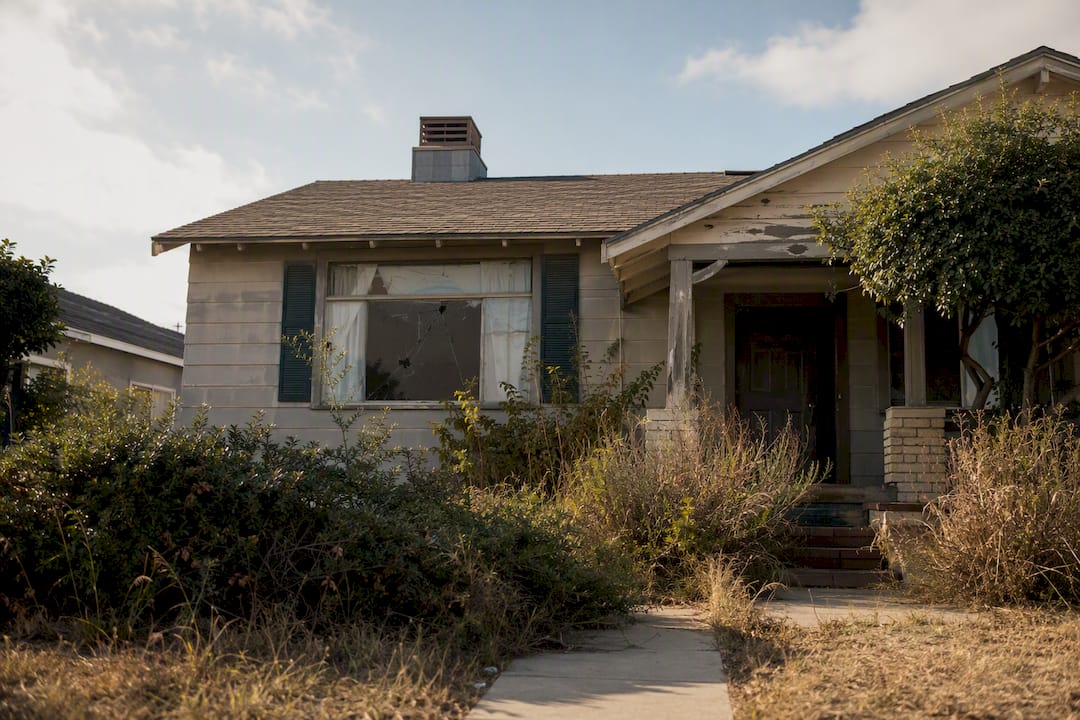
Skipping or fudging a disclosure doesn't just create risk for the buyer. It exposes you to liability months or years after closing if a known defect surfaces and the paper trail shows you knew about it.
A few practical steps protect you on either path:
- Complete the TDS and SPQ honestly, even for defects you assume the buyer will find anyway.
- Disclose known liens, unpermitted work, or code violations upfront rather than letting a buyer discover them during due diligence.
- Consider a pre-listing inspection. A seller-paid inspection sets buyer expectations early and reduces last-minute renegotiation on either a cash deal or an MLS sale.
- Loop in a real estate attorney or title company when your situation involves probate, multiple heirs, or an unresolved lien. Those complications rarely resolve cleanly without professional help.
What Should You Compare on Every Offer You Receive?
Before you accept anything, collect the same numbers from every offer on the table:
- Gross offer price.
- Any estimated repair allowance or credit the buyer wants deducted.
- Closing costs and who pays them.
- Seller concessions requested.
- Earnest money deposit amount.
- Length of any inspection or financing contingency window.
- Proposed closing date.
Once you have those figures, the net-proceeds math is simple: take the gross price, subtract repair credits, closing costs, and any commission, and what's left is your actual take-home. Comparing net proceeds side by side rather than just comparing headline prices is where most sellers get surprised, usually in a good way when a lower cash offer nets out closer to a higher MLS offer than expected once fees are factored in.
Watch for these red flags with any cash buyer: no proof of funds provided upfront, vague or shifting closing timelines, and fees that appear after you've already signed. A legitimate buyer provides written proof of funds and states closing cost responsibilities clearly before you sign anything.
Pro Tip: Ask every cash buyer for proof of funds before you sign a purchase agreement, not after. A buyer who hesitates on that request usually isn't ready to close on the timeline they promised you.
Why San Diego Sellers Get Better Outcomes With Two Options on the Table
Homeowners rarely make good decisions when they only see one path.
We've watched this play out across foreclosure timelines, probate transfers, tenant-occupied rentals, and homes carrying code violations that would scare off a typical MLS buyer. In most of those cases, the seller wasn't choosing between "good" and "bad." They were choosing between speed and certainty on one hand, and a longer process with a potentially higher net on the other. Presenting both options honestly, with real comparison numbers, is what actually helps someone decide with confidence instead of pressure.
— Justin
Ready to Compare Your Cash Offer and Your 1% Listing Net?
Sandiegocashforhouses gives you a real number for both paths before you commit to either one, which is different from calling a single cash buyer and hoping their offer is fair. You get a cash offer estimate and a projected MLS net side by side, so the choice is based on your actual numbers instead of a guess.

Getting started takes a few minutes. Have your address, a rough sense of the property's condition, and your reason for selling ready when you reach out, whether that's foreclosure, an inherited home, a difficult tenant situation, or a code violation you'd rather not fix yourself. There are no hidden fees on either path, and no obligation to move forward after you see your numbers. If foreclosure is the pressure point, the foreclosure-specific sale page walks through how to stop an auction date. If you're dealing with tenants, selling a rental with tenants in place explains how that works without eviction. And if you'd rather list with full Realtor® service at a flat 1%, the 1% listing page breaks down exactly what's included. Start on the main site to request your numbers today.
Where to Verify These California Selling Rules
For deeper detail on disclosure law, read LegalClarity's breakdown of as-is disclosure requirements. For escrow timing specifics, see Kenneth Hogan's California escrow timeline guide.
Sources
- Can You Sell a House As-Is in California? Disclosures & Risks - LegalClarity
- How to Sell a House for Cash in San Diego - HomeLight
- A No-Stress Guide to Selling a House As Is in California - AnytimeEstimate