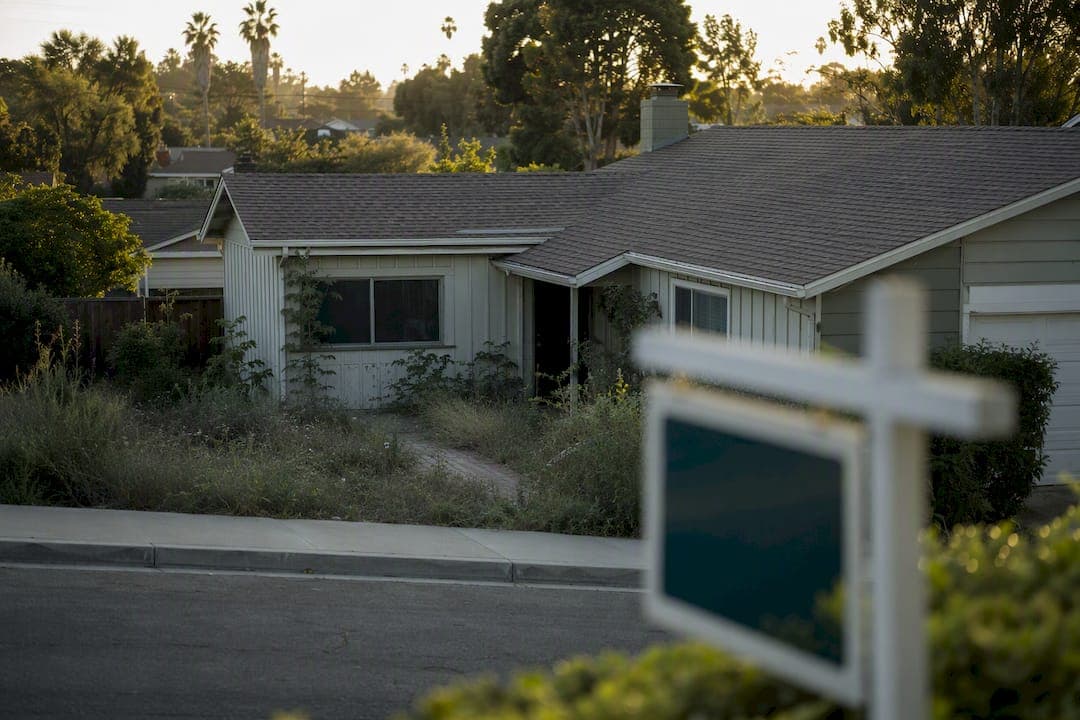
Yes, you can sell a house in foreclosure in most cases, as long as the sale closes before the foreclosure sale date. Whether that sale nets you cash or simply clears your debt depends on one factor: equity.
If you owe less than your home is worth, a standard sale pays off your mortgage at closing and you keep whatever is left over. If you owe more than it's worth, you're underwater, and you'll need a short sale that your lender must approve, or you'll consider a deed in lieu of foreclosure or a cash sale to an investor. Either way, the foreclosure clock doesn't stop you from selling. It just narrows your window.
Your first move today: call your loan servicer, ask for a current payoff figure, and request loss mitigation paperwork. At the same time, get a market value estimate or a cash offer so you know your realistic price range. The Consumer Financial Protection Bureau and HUD both confirm that acting the moment you miss a payment, rather than waiting for a formal notice, keeps more doors open. Sandiegocashforhouses works with homeowners in exactly this spot, offering cash offers in as little as 24 hours or a flat 1% listing if you have time to sell through the MLS.
Here's what determines which path fits you:
- You have equity: list traditionally or sell to a cash buyer and keep the difference after payoff.
- You're underwater: pursue a short sale with lender sign off, or consider a deed in lieu.
- You're short on time: a cash sale can close in days instead of months.
- You're unsure of your numbers: request a written net proceeds comparison before deciding.
Quick fact: Servicers generally must wait until you're at least 120 days delinquent before starting foreclosure in many cases, which is exactly why early action on your part often buys you real room to sell before an auction is ever scheduled.
Key Takeaways
Selling a house in foreclosure is possible up until the auction closes, and the right path depends on your equity, your timeline, and how fast your lender responds.
| Point | Details |
|---|---|
| You can sell until the sale closes | Ownership and the right to sell remain yours until title transfers at the foreclosure sale. |
| Equity determines your path | Positive equity supports a standard sale; being underwater generally requires a lender-approved short sale. |
| Act within the first 120 days | Servicers typically can't start foreclosure until 120 days delinquent, giving you a real window to plan. |
| Short sales need lender sign off | Approval requires a hardship packet and can take weeks to months, so submit early. |
| Sandiegocashforhouses offers two paths | Choose a cash offer closing in as few as 7 days or a flat 1% MLS listing with Realtor® services. |
Table of Contents
- When Foreclosure Starts and How Much Time You Realistically Have
- Which Selling Options Actually Stop a Foreclosure
- Step-by-Step: How to Sell Before the Foreclosure Sale
- Working With Your Lender: Approvals and Negotiation
- What You'll Owe, What You'll Keep, and the Tax Angle
- How Long Each Selling Path Actually Takes to Close
- If the Sale Completes: What Happens Next
- How San Diego Cash For Houses Fits Into a Fast Timeline
- Where to Get Direct Help Right Now
- Get a Cash Offer or a 1% Listing Started Today
- Sources
When Foreclosure Starts and How Much Time You Realistically Have
Foreclosure doesn't begin the day you miss a payment. It begins after a stretch of missed payments, and federal rules give you more runway than most people assume.
Preforeclosure is the period between your first missed payment and the servicer's formal filing to begin foreclosure. During this stretch, your loan is technically in default, but no legal foreclosure action has started. Servicers generally can't refer a loan to foreclosure until you're at least 120 days delinquent in many cases, which typically gives you four months before formal proceedings even start.
Once foreclosure begins, the process splits into two tracks depending on your state. Judicial foreclosure runs through the court system, which usually takes longer, often six months to over a year, because a judge has to sign off on each step. Nonjudicial foreclosure follows a set schedule under the deed of trust or mortgage contract, with no court involvement, and can move considerably faster, sometimes in as little as two to three months once it's officially triggered.
Federal rules also require servicers to give you a 37-day review window before proceeding to a foreclosure sale if you've submitted a complete loss mitigation application in time. That window matters because it can pause the clock while a short sale or other option gets evaluated.
A few timing patterns worth knowing:
- Miss one payment: you're in default, but no formal action yet.
- 120 days delinquent: servicer can typically begin foreclosure referral.
- Loan referred to foreclosure attorney or trustee: judicial or nonjudicial process formally starts.
- Complete loss mitigation application submitted 37+ days before sale: servicer generally must review it before proceeding.
The earlier you act, the more of these windows work in your favor. Homeowners who wait until they receive a notice of default before exploring a sale often lose the option of a standard, well-marketed listing and get pushed into a rushed cash sale or a race against the auction date.
Which Selling Options Actually Stop a Foreclosure
You have four realistic paths to sell before a foreclosure sale completes, and which one fits depends almost entirely on your equity position and how much time is left.
Traditional Sale
If your home's market value covers your mortgage balance, back payments, and closing costs, a traditional sale is the cleanest option. At closing, the title company or escrow agent pays off your loan directly from the sale proceeds, and you receive whatever remains. Nolo confirms that a completed sale, standard or short, stops foreclosure outright because it closes before the sale date, satisfying the debt that triggered the process in the first place. No lender approval beyond a standard payoff letter is required.
Short Sale
If you're underwater, meaning your mortgage balance exceeds what the home will sell for, you'll need your lender's approval to accept an offer below the payoff amount. This requires submitting a hardship packet: income documentation, a hardship letter, bank statements, and the purchase offer itself. Bankrate points out that a short sale is often the only path forward when you owe more than the home is worth, since the lender has to agree to accept less than full payoff. Upsolve notes that lenders will reject offers if the loss looks unacceptable to them, so pricing the home realistically from the start matters more in a short sale than in almost any other transaction type.
Deed in Lieu of Foreclosure
If you can't find a buyer in time, or the numbers simply don't work for a sale, you can offer to deed the property directly back to the lender. Lenders sometimes prefer this over foreclosure because it avoids court costs and the auction process. It won't recover any equity for you, but it typically has a less damaging credit impact than a completed foreclosure and can close faster since there's no buyer to coordinate with.
Cash Sale to an Investor
A cash sale to an investor or a service like Sandiegocashforhouses skips financing contingencies, appraisal delays, and repair negotiations entirely. Closings can happen in as little as seven days. The trade-off is usually a lower offer than full retail market value, but for someone racing an auction date, speed and certainty often outweigh maximizing every last dollar.

Pro Tip: Check for secondary liens, HOA assessments, or judgment liens before you price your home. A second mortgage or unpaid HOA dues can eat into your proceeds or block a sale entirely if they're not addressed at closing.
State law also shapes which option is realistic. Some states allow foreclosure to move faster than others, and secondary liens or HOA liens can complicate a short sale's approval timeline regardless of where you live.
Step-by-Step: How to Sell Before the Foreclosure Sale
Speed and organization matter more than perfection here. Follow this sequence starting today.
- Call your servicer within 24 to 72 hours. Request your current payoff amount, ask what stage your file is in, and get the loss mitigation application sent to you.
- Get a market value estimate or cash offer immediately. You need a realistic number before you can decide between listing, a short sale, or a fast cash sale.
- Choose your path. If you have equity and time, list with an agent. If you're underwater, submit a short sale hardship packet. If time is short, request written cash offers with proof of funds.
- Gather your documents. You'll need mortgage statements, a preliminary title report, HOA account info, property tax records, a hardship letter (for short sales), and any recent comps or appraisal.
- Price to move, not to test the market. In a foreclosure timeline, an overpriced listing that sits for 30 days without an offer can cost you the entire window.
- Coordinate your closing date against the auction date, with a buffer. Never assume a closing will happen exactly on schedule; build in at least a week or two of cushion.
- Avoid buyer financing contingencies when time is tight. A financed buyer whose loan falls through with two weeks left before auction can cost you the house.
Documents to have ready before you talk to anyone:
- Most recent mortgage statement showing the payoff balance
- Preliminary title report or a recent title search
- HOA statement showing dues owed, if applicable
- Property tax statement
- Hardship letter and income documentation, if pursuing a short sale
- Recent comparable sales or a written cash offer for pricing reference
Negotiating with a buyer under time pressure is different from a normal sale. Be upfront that you're in foreclosure, since experienced buyers and agents will find out anyway through title work, and hiding it tends to slow things down when it surfaces late. A buyer who knows the timeline and still wants the deal is a stronger buyer than one who gets spooked mid escrow.
Working With Your Lender: Approvals and Negotiation
Your servicer holds more power over your timeline than any other party in this transaction, which makes early, documented communication your best tool.
Loss mitigation rules require servicers to review a complete application if you submit it at least 37 days before a scheduled foreclosure sale. Submit early, and submit everything requested the first time. Incomplete applications get sent back, and that back and forth burns days you don't have.
For a short sale specifically, the servicer's negotiator will typically ask for the hardship letter, two years of tax returns or recent pay stubs, a comparative market analysis or appraisal, and the actual purchase contract before issuing approval. Upsolve explains that servicers will decline offers that create an unacceptable loss relative to foreclosing and reselling themselves, so your offer needs to be within a realistic range of market value, not a lowball.
Once a servicer accepts a pending sale, get the pause or postponement of the foreclosure sale date in writing. A verbal assurance from a call center representative isn't something you want to rely on if the sale date arrives before your loan file catches up.
- Submit your loss mitigation application as early as possible, ideally the moment you know you'll miss a payment.
- Request written confirmation any time the servicer agrees to delay or postpone the sale date.
- Keep a log of every call: date, representative name, and what was discussed.
- If your servicer is unresponsive or the deadline feels unmanageable, contact a HUD-approved housing counselor or a real estate attorney.
Pro Tip: Ask your servicer directly whether they'll waive the deficiency balance as part of a short sale approval. Some will, especially if you're proactive and the file is well documented, and it can save you from a surprise bill months after closing.
What You'll Owe, What You'll Keep, and the Tax Angle
Before you accept any offer, run the math on what actually lands in your pocket, or what you might still owe afterward.
Net proceeds work like this: sale price, minus your mortgage payoff, minus any back payments and late fees, minus agent commission if you're listing traditionally, minus closing costs. If that number is positive, you walk away with cash. If it's negative and your lender won't approve a short sale at that price, you may need to bring funds to closing to complete the transaction, which is worth knowing before you get attached to a specific buyer.
If your home sells for less than you owe and the lender doesn't fully forgive the difference, they can pursue a deficiency judgment for the remainder in many states, though some states limit or bar this depending on the loan type. Look up your state's specific deficiency rules before you assume you're in the clear.
Forgiven mortgage debt can sometimes count as taxable income. CFPB and HUD guidance both point homeowners toward speaking with a tax professional before finalizing a short sale, since the tax treatment of canceled debt depends on your specific circumstances and current law.
Credit impact matters too. According to Nolo, a short sale or deed in lieu typically hits your credit less hard than a completed foreclosure, and can shorten how long you wait before qualifying for a new mortgage, often around two to four years for a short sale versus three to seven years for a completed foreclosure, depending on the loan type and lender.
- Calculate net proceeds before accepting any offer, including a cash offer.
- Ask your servicer directly about deficiency judgment policy in your state.
- Talk to a tax professional if any debt might be forgiven.
- Compare credit recovery timelines: credit recovered sooner after a short sale than after foreclosure.
How Long Each Selling Path Actually Takes to Close
Timing is the single biggest variable separating a successful preforeclosure sale from a missed deadline.
A cash sale to an investor can close in as little as seven days if the buyer has proof of funds ready and there are no title complications. This is the fastest realistic path when your auction date is close.
A traditional agent-listed sale typically takes 30 to 60 days or more from listing to closing, depending on your local market and whether the buyer needs financing. That timeline assumes a smooth transaction; any hiccup with the buyer's loan can add weeks.
A short sale is the least predictable. Between hardship packet review, appraisal, and negotiator sign off, approval alone can take several weeks to a few months. Upsolve notes this back and forth is common enough that homeowners should expect delays rather than be surprised by them.
Common causes of delay across all three paths:
- Unreleased liens or title defects discovered during escrow
- HOA payoff demands that take longer than expected to obtain
- Slow servicer response times on payoff letters or short sale approval
- Buyer financing falling through late in escrow
Set your target closing date at least two to three weeks before your actual auction date, not the day before. That buffer absorbs the kind of last-minute delay that's common in almost every real estate closing, foreclosure or not.
If the Sale Completes: What Happens Next
Once the foreclosure sale is finalized, the property title transfers to the winning bidder or back to the lender, and your right to sell the home ends immediately.
Some states offer a redemption period after the sale, giving the former homeowner a limited window to reclaim the property by paying the full amount owed plus fees. Where redemption exists, it can range from a matter of days to several months depending on the state; where it doesn't exist, the sale is final the moment it's recorded.
You'll typically receive a notice specifying how long you have to vacate, often ranging from a few days to a few weeks depending on local eviction procedures. Retrieve personal property promptly and get any move-out arrangement in writing with the new owner or the lender's representative.
- Confirm whether your state offers any redemption period, and its exact length.
- Document every conversation with your servicer up to and after the sale date.
- Consult a legal aid attorney immediately if you believe the foreclosure was processed improperly.
- Bankruptcy can, in narrow circumstances, delay or affect a pending sale, but it requires legal guidance specific to your situation.
How San Diego Cash For Houses Fits Into a Fast Timeline
When the calendar is working against you, Sandiegocashforhouses gives homeowners in foreclosure two clear, transparent paths rather than one rigid process.
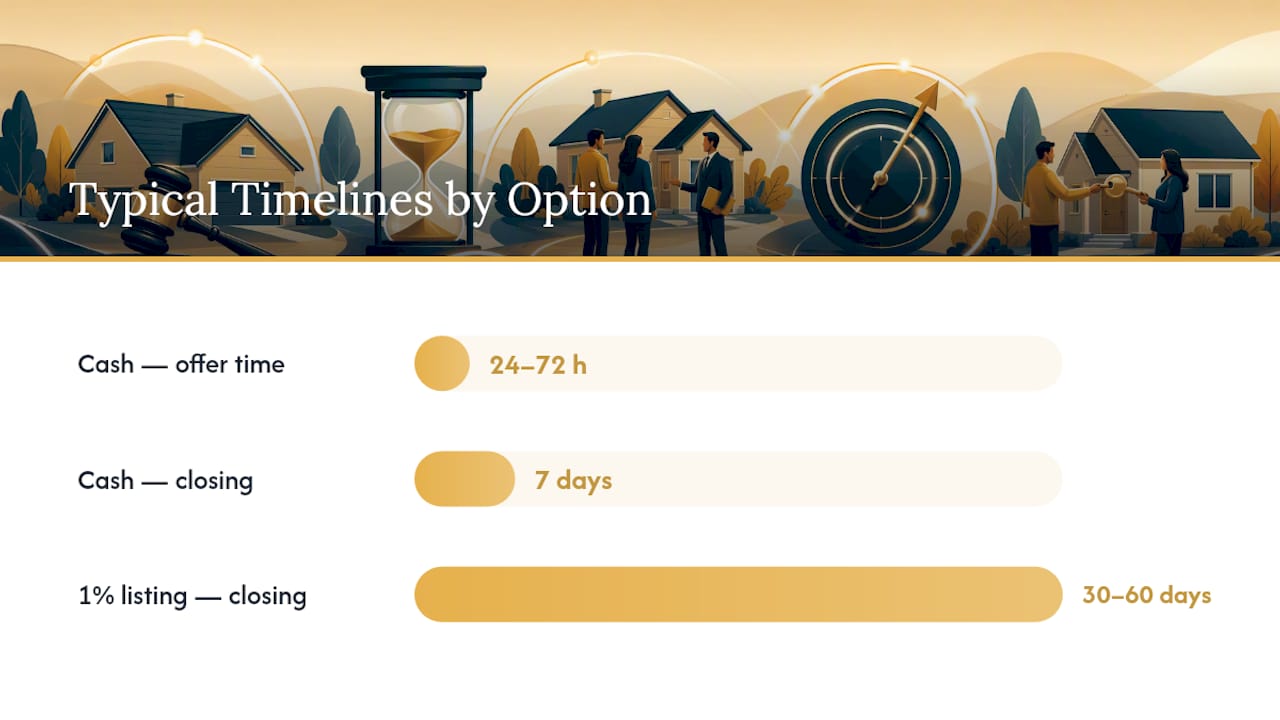
The first is a cash offer on your home exactly as it sits, no repairs, no cleaning, no staging. Offers can typically arrive in as little as 24 to 72 hours, with closings possible in as few as seven days. That timeline matters most when you're weeks, not months, from an auction date and a traditional listing simply isn't realistic anymore.
The second path is a flat 1% MLS listing with full Realtor® services, which suits homeowners who still have enough runway to market the home properly and want to maximize what they walk away with. There are no hidden fees in either path, and you can request a written comparison of what you'd likely net from a cash offer versus a traditional listing before committing to either one.
- Cash offers: as-is condition, typically 24 to 72 hours to receive, closings in as few as 7 days.
- 1% listing: full Realtor® service, MLS exposure, standard closing timelines of 30 to 60 days.
- No commissions or fees on the cash-offer path; transparent, flat 1% on the listing path.
- Request a side-by-side net proceeds comparison before choosing either option.
Pro Tip: Ask for the net proceeds comparison in writing, not verbally, so you can weigh the actual dollar difference between a fast cash close and a longer listing timeline against your specific auction date.
Where to Get Direct Help Right Now
Start with CFPB's foreclosure timeline guidance and HUD's foreclosure avoidance resources for federal rules and free housing counselor referrals. The NFCC can connect you with certified credit counselors, and an attorney familiar with your state's foreclosure laws can review your specific situation before you sign anything.
A Practical Note on Common Mistakes
The homeowners who lose the most equity are almost always the ones who waited, hoping the problem would resolve itself before making a single call. Silence doesn't slow foreclosure down. It speeds up your loss of options.
The second most common mistake is failing to document communication with the servicer. Get names, dates, and get delay agreements in writing. Verbal promises evaporate the moment your file changes hands internally, which happens more often than homeowners expect.
If your situation feels tangled, secondary liens, an unresponsive servicer, a looming auction date, talk to a HUD-approved housing counselor or a real estate attorney before you guess your way through it. The cost of that conversation is nearly always smaller than the cost of a mistake made under pressure.
— Justin
Get a Cash Offer or a 1% Listing Started Today
Sandiegocashforhouses gives you a faster, more transparent alternative to the guesswork of trying to time a traditional listing against an auction date. Instead of gambling on a 30 to 60 day sale with financing contingencies, you get a real cash offer in as little as 24 hours, or a full-service 1% listing if you have more runway, with a written comparison so you know exactly what each path puts in your pocket.
To get started, have your property address, an estimate of your remaining mortgage balance, and your preferred closing timeframe ready. From there, Sandiegocashforhouses can walk you through both options side by side so you're deciding with real numbers instead of pressure. Visit the foreclosure sale page to request your offer, or compare cash offers versus listing if you're still weighing your timeline. There's no obligation to move forward, and no hidden fees on either path.
This article is general information, not a substitute for advice from a qualified financial advisor. Consult a qualified financial professional about your own circumstances before acting on anything here.
Sources
- How long will it take before I’ll face foreclosure? (CFPB)
- Avoiding foreclosure (HUD)
- Can I sell my home before foreclosure? (Nolo)
- Underwater mortgage: what to do (Bankrate)
Recommended
- Sell a House in Foreclosure in San Diego | Stop the Auction, Keep Your Equity
- How to Stop Foreclosure in San Diego Before the Auction | San Diego Cash For Houses
- Sell a House With Code Violations in San Diego | Unpermitted Work OK
- Sell a House During a Divorce in San Diego | Fast, Neutral, Clean Split